One workspace per client
Endpoints, incidents, users, reports, and maintenance windows stay scoped to the organization they belong to.
Uptime monitoring for agencies
StatusPulse gives each client a separate workspace for sites and APIs: real HTTP checks, a public status URL, incident history, users, and SLA reporting.
Self-hostable. Runs on Postgres. No agent to install on client infrastructure.
Agency problem
One account per client creates login sprawl. One shared account blurs ownership. Raw monitor logs do not answer the question clients ask after an outage: what failed, when, and how long did it last?
Endpoints, incidents, users, reports, and maintenance windows stay scoped to the organization they belong to.
Users sign in to their assigned workspace, so an operator never lands in another client’s dashboard.
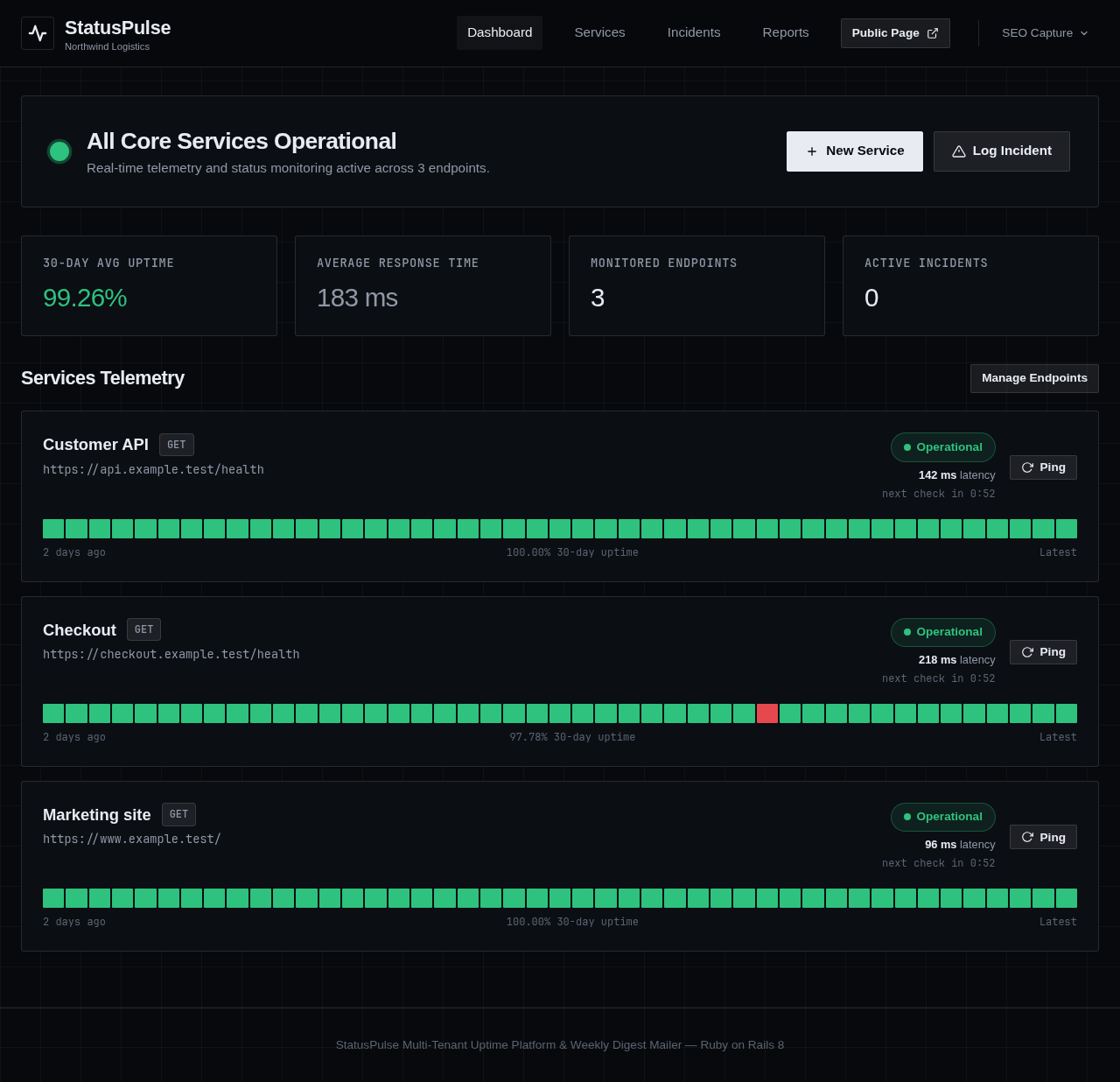
Each workspace publishes to /status/<client>, so client stakeholders have a page to check during incidents.
What clients see
Workflow
StatusPulse follows the way agencies already operate: configure the client once, monitor the real endpoints, then report uptime in language the client can read.
Use GET, POST, PUT, PATCH, DELETE, HEAD, and OPTIONS with headers, request bodies, expected status codes, and response text assertions.
Record investigating, identified, monitoring, and resolved updates with timestamps and affected services.
Show 7, 30, and 90-day uptime, P90 latency, averages, and weekly digest summaries per workspace.
Create its workspace, point it at an endpoint, and publish a status URL when you are ready.
Create a workspace