Endpoints
HTTP checks belong to one workspace, with method, cadence, timeout, headers, body, and assertion settings kept with that client.
Multi-tenant uptime monitoring
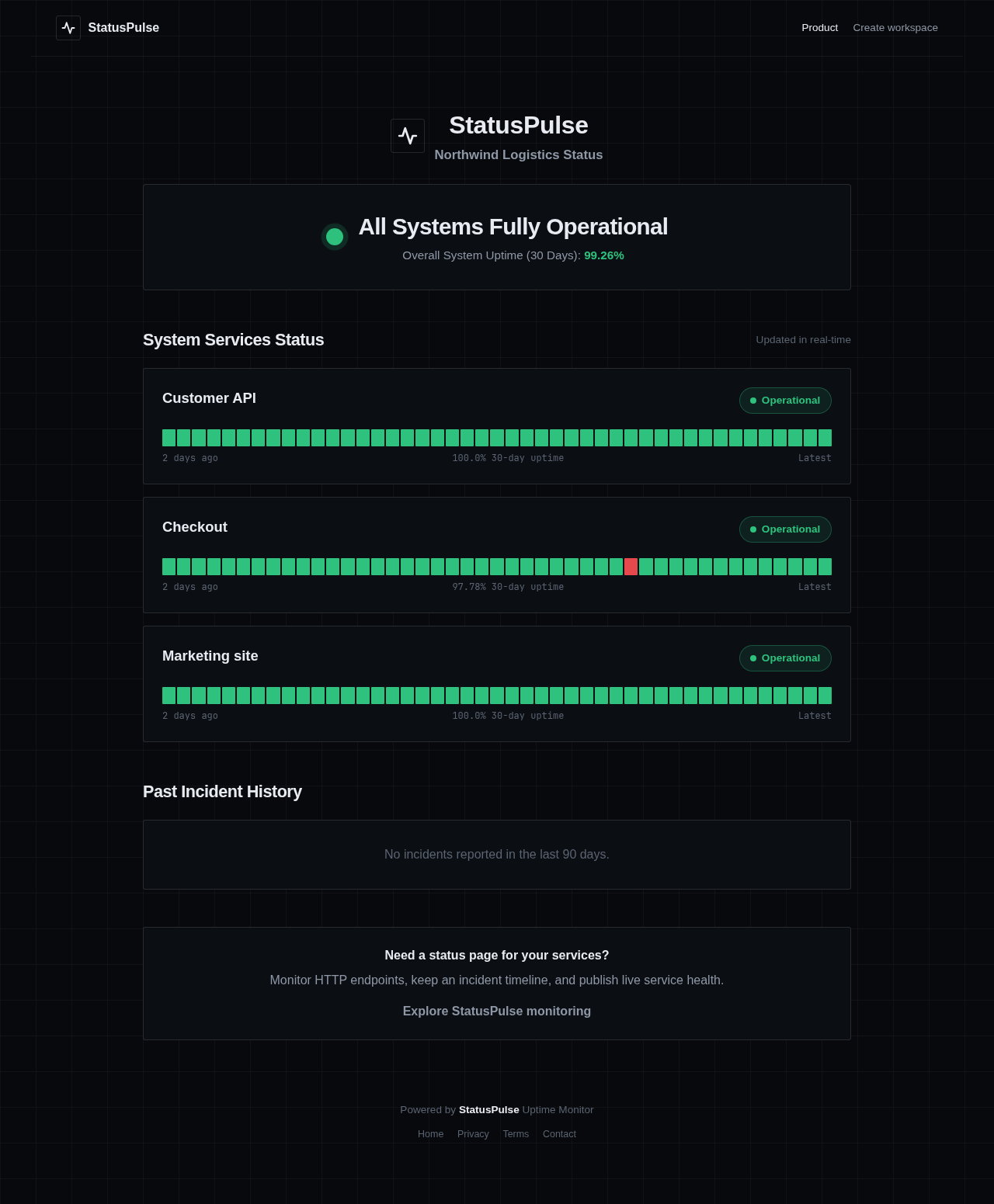
StatusPulse is organized around client workspaces. Each workspace owns its endpoints, incidents, users, reports, maintenance windows, and public /status/<client> page.
Built for self-hosters that need separate monitoring environments for separate clients.
Isolation model
A client workspace is not just a filter in the interface. It is the unit that owns operational records and keeps client context clear.
HTTP checks belong to one workspace, with method, cadence, timeout, headers, body, and assertion settings kept with that client.
Incident records and updates stay attached to the workspace and the services they affected.
Uptime windows, latency statistics, and weekly digests are produced per workspace so reporting matches the client relationship.
Tenant output
Why it matters
Client work introduces boundaries: different stakeholders, services, incident timelines, and reports. StatusPulse preserves those boundaries by assigning each user and operational record to one workspace.
Run separate client workspaces in one StatusPulse deployment while keeping user access and operational data tenant-scoped.
Give stakeholders a status URL for their workspace instead of exposing unrelated services.
Within their assigned workspace, operators triage incidents and review reports with client context already attached.
Create a workspace with its first administrator, then configure that client’s endpoints and public status page.
Create a workspace